Graph-Based Transaction Monitoring: Why Entity Relationships Change the AML Picture
Transaction monitoring has, for most of its history, been a per-transaction problem. A payment arrives. The system checks it against a set of rules. If the transaction matches a pattern, an alert fires. If it does not, the transaction clears. The account moves on. The next transaction goes through the same evaluation, in isolation from everything that came before it.
That architecture made sense when the goal was screening for a small number of high-confidence typologies: cash structuring below reporting thresholds, wire transfers to sanctioned jurisdictions, unusual velocity from dormant accounts. Those are patterns visible in individual transactions or short sequences. But they represent a fraction of the financial crime that compliance teams are actually obligated to detect.
The patterns that matter most in modern digital banking, especially layering schemes, mule account networks, and organized synthetic identity fraud, are not visible in transactions. They are visible in relationships. And relationships require a different kind of analysis entirely.
What Rule Engines Cannot See
Consider a scenario we encountered in early design-partner work. Three accounts at a digital bank are each receiving ACH deposits from different employer names roughly every two weeks. The amounts vary. Each account, viewed individually, looks like a payroll recipient. The transaction history is unremarkable by any rule threshold.
What is not visible in per-transaction analysis: all three accounts were opened within four days of each other, from the same device fingerprint, with phone numbers sharing the same carrier block. Within six weeks of opening, each account began transferring 80% to 90% of its balance to a single external account at a second institution, using different payment rails each time.
No individual transaction in this network triggers a velocity alert, a structuring alert, or a high-risk geography flag. The amounts are modest. The frequency is regular. The destinations are domestic. Rule-based systems, calibrated to evaluate transactions, pass every one of these through clean.
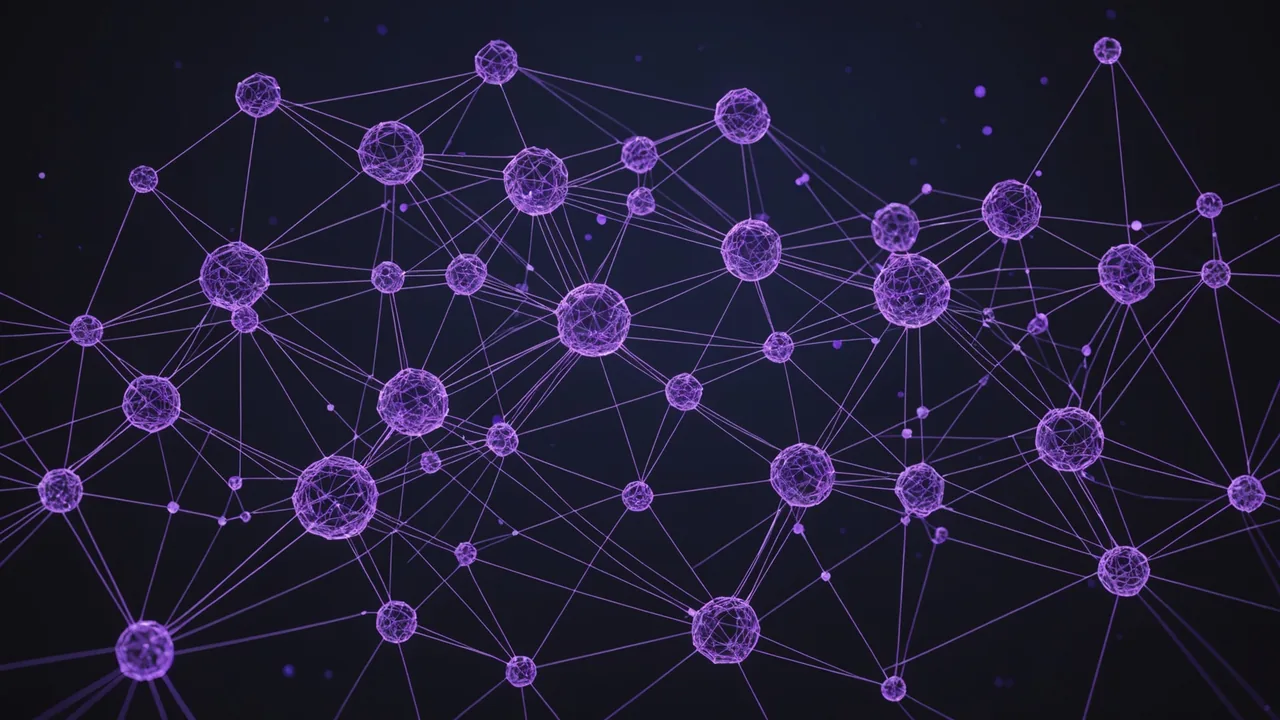
Graph-based entity resolution is the approach that makes this pattern visible. Rather than evaluating each transaction against a ruleset, graph analysis builds a network of entities -- accounts, device identifiers, phone numbers, email addresses, physical addresses, beneficial owners, and transaction counterparties -- and maps the edges connecting them. The resulting graph exposes the shared infrastructure underlying what appeared to be three independent accounts.
How Graph Analysis Works in Practice
The core operation is entity resolution: matching and linking records across different data types that likely refer to the same real-world entity. A device ID used across three account opening events is an edge. A phone number that appears in two KYC applications is an edge. An IP address shared across account logins is an edge. A transaction counterparty that receives funds from multiple accounts is an edge.
Once those edges are established, the graph allows analysts and detection systems to traverse relationships that would otherwise be invisible. The question changes from "is this transaction suspicious?" to "is this entity, and the cluster it belongs to, exhibiting behavior consistent with a known financial crime typology?"
Practically, graph traversal in production monitoring systems works against a set of subgraph queries. You define the structure you are looking for -- a hub node receiving funds from a set of spokes, or a chain of sequential transfers through a series of intermediate accounts -- and the graph engine identifies all instances of that structure currently present in the data. Alert generation happens at the entity or cluster level rather than the transaction level.
This has a direct effect on alert quality. When an alert fires on a three-account cluster with shared device infrastructure and convergent fund flows, every transaction in the cluster becomes immediately available to the investigating analyst. The case builds itself from graph structure rather than requiring manual linkage work. What would have been three separate alerts, each looking unremarkable in isolation, becomes one alert on a network with visible structure.
Layering Detection: Where Graph Matters Most
The layering stage of money laundering is specifically designed to defeat transaction-level analysis. Funds move through a series of intermediate accounts, often at different institutions, with each hop changing the apparent origin of the money. By the time funds reach integration -- appearing as a legitimate payment for a service or investment -- the transaction trail has been disrupted enough that no single transaction looks obviously connected to the placement stage.
Graph-based approaches change what is detectable. When transaction counterparties are treated as nodes in a network rather than destination addresses, layering patterns become visible as structural signatures. A chain in which Account A sends to Account B, which sends to Account C, which sends to Account D before exiting the network, is a detectable graph motif even when each individual transfer is below reporting thresholds and uses different payment rails.
The detection is not guaranteed -- chains that span institutions require correspondent data or law enforcement cooperation to complete. But the portion of the layering chain visible within a single institution is detectable at a rate that rule-based systems cannot approach. In our testing on synthetic datasets modeled on known layering typologies, graph-based detection identified structured chains that produced zero alerts in a standard rule configuration.
Shared-Device and Synthetic Identity Networks
Two typologies that appear with increasing frequency at digital banks are particularly well-suited to graph detection: shared-device account networks and synthetic identity clusters.
Shared-device networks exploit the fact that mobile banking applications collect device signals for fraud prevention but rarely use those signals for AML correlation. A single device opening 15 accounts over three months generates 15 independent KYC records. Each account has a unique SSN (real or synthetic). Each account passes identity verification individually. Rule-based monitoring evaluates each account independently. The network is invisible.
Graph analysis treats the device ID as a link. The 15 accounts resolve into a single cluster. Behavioral patterns across the cluster become queryable. Fund flow analysis reveals whether the accounts are operating as independent individuals or as coordinated nodes receiving and transmitting funds in correlated ways.
Synthetic identity fraud presents a similar structural pattern. Synthetic identities -- constructed from real SSNs and fabricated or mixed personal data -- often share underlying infrastructure elements. Phone numbers in the same number block. Email addresses with the same domain pattern. Physical addresses that are commercial mail forwarding services. Each identity, checked individually, may pass verification. As a graph, the population of synthetic identities at an institution often has visible clustering that marks them as manufactured rather than organic.
Integration with Existing Monitoring Infrastructure
One practical question compliance and engineering teams raise about graph-based monitoring is integration complexity. Most digital banks already have a transaction monitoring system, a KYC platform, a case management tool, and a data pipeline feeding them. Adding a graph layer sounds like adding another system to maintain.
The architecture that works best in production treats graph analysis as an enrichment layer rather than a replacement for existing rule-based monitoring. Rule engines catch high-confidence single-transaction patterns -- velocity anomalies, sanctions hits, structuring attempts -- and pass clean results to case management. Graph analysis runs in parallel, consuming the same transaction data plus entity attribute data from KYC and device signals, and surfaces entity-level alerts that the rule engine cannot generate.
The two alert streams feed a shared case management system where analysts work from a unified queue. Graph-derived alerts carry entity relationship maps and supporting transaction timelines as part of the alert payload. Analysts see the network structure alongside the triggering transactions rather than having to reconstruct it manually.
This integration model avoids the cost and risk of ripping out existing monitoring infrastructure while adding the detection coverage that rule engines cannot provide. It also allows gradual calibration: graph detection thresholds can be tuned over time as the false-positive and true-positive rates for specific subgraph queries become apparent in production data.
What This Means for Compliance Program Design
The practical implication for BSA officers thinking about monitoring program design is this: transaction-level detection and entity-level detection are not competing approaches. They are complementary, and a program that relies solely on transaction-level rules has a structural blind spot in its coverage.
FinCEN's guidance on transaction monitoring has repeatedly emphasized the importance of detecting patterns across related accounts and transactions, not just individual transactions in isolation. Examiners reviewing monitoring programs increasingly expect to see evidence that the institution can identify coordinated behavior across accounts -- which is precisely what graph-based approaches are built to detect.
Building that capability does not require replacing existing infrastructure. It requires adding an entity relationship layer to the data model and applying network analysis against it. The detection coverage that results is qualitatively different from what rule engines produce -- and the typologies it catches are exactly the ones most likely to generate enforcement attention if missed.
Financial crime hides in relationships, not in individual transactions. A monitoring program that cannot see relationships cannot see a significant portion of the risk it is responsible for detecting.
If you want to understand how graph-based entity resolution would apply to your institution's specific data architecture and customer profile, contact our team to walk through the technical integration requirements.